Combating the Leads Gap with Paid Social
Are you generating enough leads? More importantly, are you handling the ones you get correctly? In today’s saturated market leads are harder to come by, customers are slower to spend, and the old approach of waiting for the phone to ring isn’t going to cut it. Enter paid social media.
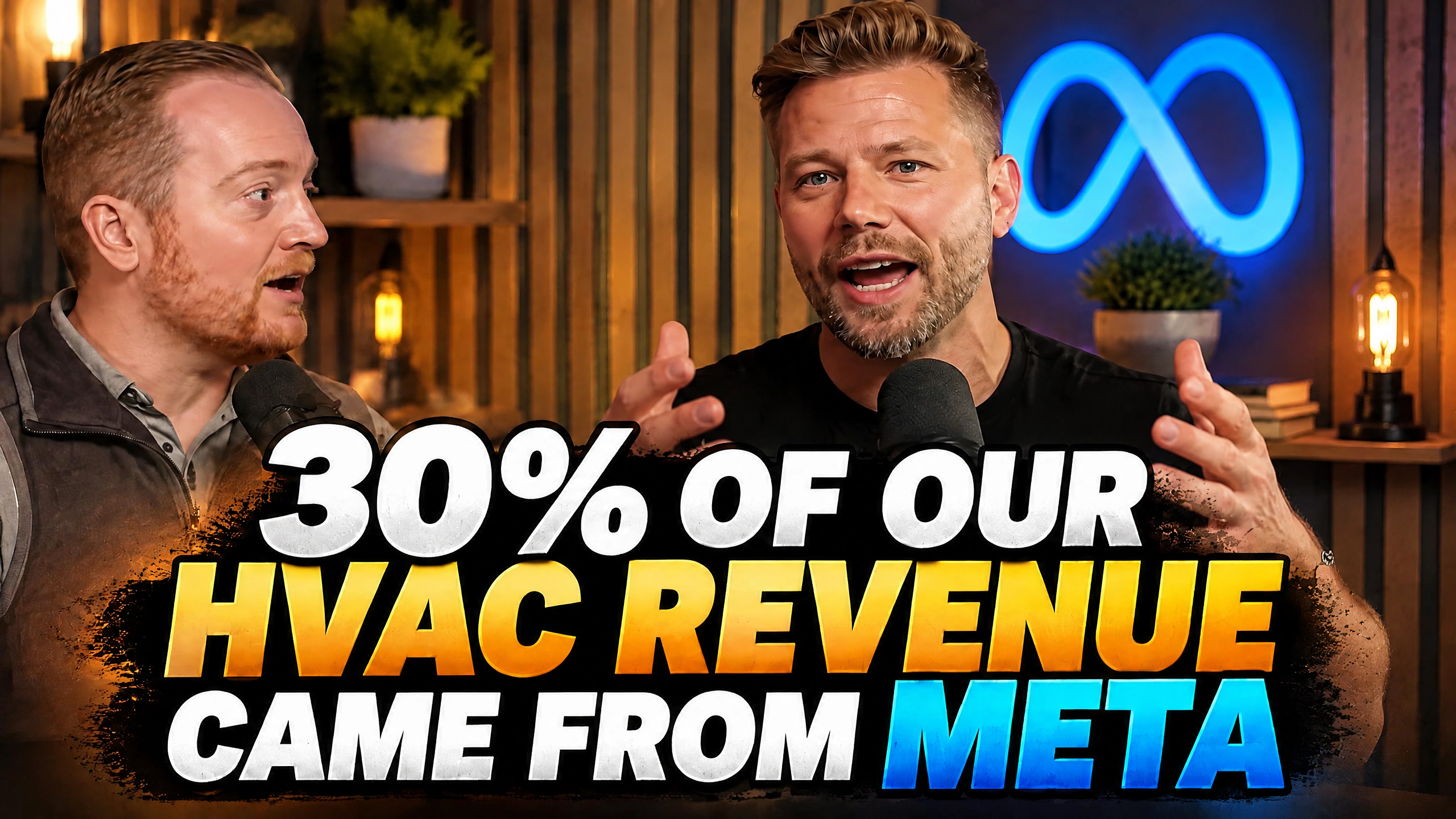
In this episode of Cracking The Code, Brad Barron sits down with Brandon Sommers, President of HVAC Launch, to talk about closing the lead gap and getting more from your marketing and sales process. Brandon shares how he rebuilt his approach to Facebook and Instagram advertising after performance dropped, why every lead needs clear ownership and relentless follow-up, and how simple tactics like faster response times and the “double dial” can dramatically improve connection rates.
Podcast: Play in new window | Download
00:01:06:06 – 00:01:18:16
Now. People don’t want to part with money if they don’t have to. The most common thing that we’re hearing right now is I do want to do this, but just not yet.
00:01:18:18 – 00:01:47:01
Welcome to another episode of Cracking the Code with your host, Jada Moneymaker. We got a great episode coming, actually, from the Baron Studio out there in Bellingham, Washington, and we got a great guest. We got Brandon Summers with advantage. This episode is going to be about meta leads, something that’s really, really important. Brad, let’s go ahead and roll it baby.
00:01:47:04 – 00:02:13:21
Hey, I’m Brad Baron and welcome to another episode of Egas Cracking the Code. You’ll notice that Jason Walker, who normally does that, is not here today, but I’m excited to be able to hold down the fort without him. He is spending time with family. So today we are live from the whole home media studio, which is super exciting in Ferndale, Washington, which is where Baron Heating, AC Electrical and Plumbing is headquartered today.
00:02:13:21 – 00:02:32:03
I’m super pumped and very excited to have this gentleman next to me. We have Brandon Summers of Advantage Heating and Electrical. You are not only a worker there, but also a part owner as well with your father. Correct? Welcome to the show. Thank you man. Yeah, you did really well without Jason here, so well done. Yeah, I liked it.
00:02:32:05 – 00:02:51:03
At the end of the day, if I get a text from Jason that says Brad, well done, then I think I can rest easy and my life is fulfilled. So perfect. But I’m excited here to talk about, I think, a really important topic. So I want to set the stage because I think it’s important to set the stage back during the Covid era, right?
00:02:51:04 – 00:03:11:17
2020 to 2022, early 2023 leads were flowing like it was crazy how often we would get calls like left, right, like more than we can handle. It was nuts. And at the end of the day, and I know we’ve talked before, we happen to know each other as well as Dyck and dealers, which is awesome. But we talked about during that time how crazy things were.
00:03:11:18 – 00:03:39:13
I mean, I think at one point, advantage, correct me if I’m wrong, was like the fit sales team in the United States. Yeah, we were, and I believe it was like that year we we got the dike in number one, North Dike in number one dealer in all of North America, partially for that. Like there was a I remember coming into that July, we were just doing like some marketing budgeting stuff and we were talking about, you know, okay, well, we’re budgeting based on like the number of leads and estimate appointments that we can get.
00:03:39:14 – 00:03:54:03
And my question to my dad and the team was like, okay, well, how many leads do you want? Yeah. And that it was literally like, okay, well let’s make sure that we don’t end up generating more leads and we can do the work for because now we’re making, now we’re wasting money. And we have the exact opposite problem today.
00:03:54:04 – 00:04:13:09
Yeah. Well, and that sets the stage perfectly for what I want to talk to this audience about what I want to talk to you about. And that is combating the leads gap. I know back during the Covid era, we talked a lot about the trades gap being a lot of technicians or excuse me, not a lot of technicians for way too many leads and jobs now it feels like it’s flipped a little bit.
00:04:13:10 – 00:04:34:06
We still need good technicians. I know we’ve had conversations about the need to continually up level what we’re doing and why we’re doing it, and how we’re doing it in regards to recruiting and retaining and continuing to train top quality field staff, but without leads and without sales and revenue. We don’t have jobs to be able to send those folks out on.
00:04:34:06 – 00:05:06:18
So there is this gap. And as trades leaders, we actually have to go out and try to combat that gap. One of the things that inspired me to bring in the show, Brandon, is the fact that you are doing some pretty awesome things that I think would be relevant to folks listening in to cracking the code at advantage when it comes to lead gen, when it comes to how you attack leads, once they actually hit inside of your building and you’ve got some unique strategies I want to dive into, you also have some pretty cool things that you do in the home at bear, and we call it setting a baseline.
00:05:06:18 – 00:05:22:14
You guys had advantage from what I can see. Set an awesome baseline and then you’re relentless on your follow up. But before I get into that, and I think it’s important because I try to do this with everyone on the call and everyone on crack in the code. I want to get to know you a little bit first so I know you, but I want to get to know you better.
00:05:22:14 – 00:05:38:04
Maybe I’ll learn something new, but also for the audience. It’d be great to be able to tell them a little bit about yourself. So right over there, tell me a little bit about who you are and what you guys do at advantage. Yeah. So I mean, my dad started advantage in 1992. So I grew up around the industry.
00:05:38:04 – 00:05:58:17
I was probably I would have been four, maybe almost five years old by the time it started. And like I literally remember Saturdays where like, guys are coming in from the shop right next to our house, which I don’t even know what the square footage was like. Looking back, it was probably like a glorified shed, right? And they, like, are coming in on a Saturday morning, like using the bathroom in the house while I’m a kid watching cartoons.
00:05:58:17 – 00:06:17:12
So literally grew up around it. Fast forward a little bit later. He’s using me, you know, for 2 to $5 an hour to like, crawl under houses or like organize the minimum wage, then it was not minimum wage, which by the time I was about 14, I realized, and I was like, I have friends actually, who are able to get jobs now and they make minimum wage.
00:06:17:12 – 00:06:41:18
So maybe if we could do something here, we have some similar stories. We’ll have to talk about that. Those darn dads. Yeah. Father entrepreneurs tend to like child labor. Yeah, exactly. Yeah. And the trades in the trades. Yeah. But no, I very much had no interest in getting into HVAC, getting into the trades like my dad, like being a business owner and getting something off the ground like, is obviously super challenging.
00:06:41:19 – 00:06:59:22
Oh, 100%. And so there were plenty of years, you know, it tends to be, especially in the early days, it’s like very feast or famine. So there were times where, okay, we didn’t have a lot of money, right. And that was very obvious to me as I got older, especially getting into high school. And then not to mention like what I got used for labor wise.
00:06:59:22 – 00:07:22:19
Right? Like crawling under houses, fishing lines, like fishing for wire and stuff like that. I’m like, I hate tight spaces. Yeah, I really hate spiders. Yeah, there’s no money in this, clearly, from what I can see. So I’m like, there’s no money. Tight spaces, spiders like this is obviously not for me. But anyway, fast forward a little bit later by I think I was it was about 2015.
00:07:22:20 – 00:07:42:16
I had been living in Portland for about 7 or 8 years, decided that I wanted to move back to Salem, and just as I was coming back, my dad was talking to me about potentially get into sales because that’s what I’d kind of pursued. I sold for AT&T, was an assistant manager for one of the retail stores in Portland, so I’d gained several years of sales experience, and it was kind of a skill set that I was very much working on honing.
00:07:42:16 – 00:07:56:20
I wanted I learned very early on, or at least I had the epiphany, and it’s worked out well for me so far. I figured if I could learn how to sell and I could learn how to lead people, I could do almost anything that I wanted. So that was like in the very early days, it was like, let’s just figure out those skills.
00:07:56:22 – 00:08:09:20
And he had one salesperson at the time, and he was my dad was kind of handling the overflow. I think there was 14 or 15 total employees at the company. So it got it had grown a bit since I was a kid. Yeah. And he was trying to convince me, like, hey, like, this could be a good opportunity.
00:08:09:20 – 00:08:24:16
I still have the old mentality of, like, there’s no way you’re making any money here. But anyway, he he bribed me with a trip to Vegas to one of the dealer conferences and stuff. He doesn’t want a trip to Vegas. That sounds great. That’s how he got me. So I ended up showing up in Vegas for a couple days talk with this sales person.
00:08:24:17 – 00:08:41:22
I’m like, you’re making 120,000 a year. Yeah. Like, okay. And what do you do? You just showing up to houses? I’m looking at systems. I have no idea what I’m doing, but I’m like, okay, I’ll give it a try. Yeah. Let’s let’s see how this works. And over the next couple of years, all I was doing was sales.
00:08:41:22 – 00:09:01:19
But I noticed then. Right. Like we we had a leads problem. Yeah. So I was like, well I’m following Gary Vee. I’m following other people who are like really branching into creating content, running ads on social media and kind of seeing the effectiveness there and then picking up strategies for how to do that. Well, I was like, I wonder if there’s a pathway to do that for advantage heating.
00:09:01:21 – 00:09:23:13
And about what time was this? If you’re looking at year, like, what year was this that you were starting to identify that that might be a path you could lean into from the sales standpoint. So probably somewhere in the somewhere right around 2017. Okay. Perfect. So pre-COVID, this was pre-COVID pre-COVID. And it was far enough into like content creators, influencer marketing and stuff like that.
00:09:23:13 – 00:09:40:17
That had already been proven right, like in other industries. That was not an uncommon thing. Agreed. But in age and in the trades, it very much was. I literally had people like telling me I was wasting my time. It was never going to work. Most people don’t have a Facebook. Not in our market, not in our industry, not for our target market, whatever.
00:09:40:17 – 00:09:56:04
I didn’t care because I was seeing it work elsewhere. I heard all those same things too. Yeah, yeah. So I get it. We I started doing that nights and weekends. So I would like literally start I would be like making content and then eventually a couple years later actually running ads. And then I would be the one out running those leads.
00:09:56:10 – 00:10:16:11
So I was able to get a really nice feedback. So you’re doing it and immediately getting that. Yes. What’s happening. What’s the feedback? Is this working not what worked? Well, what video was it that caught your attention? Why did you choose to make the phone call or send the message like it was so rudimentary back then? It was like images, text, send us a Facebook message and then people would and then, you know, we would try and book the lead.
00:10:16:11 – 00:10:30:17
And half the time I have the the Facebook Messenger account on my phone. So like half the time I’m also booking. You’re the guy doing it. Yeah, yeah. So I’m running the ads, I’m booking the leads. I’m running the leads. Yeah. Because it’s 8:00 at night. No one and no one’s in the office, man. So what am I gonna do?
00:10:30:17 – 00:10:47:11
I’m not gonna let it sit there. I want this lead. Otherwise, like, my stuff’s not working on it. Feed you, right? Yes, it feeds me. I’m gonna go run. Me. Yeah, exactly. So I had a really great feedback loop at the time, and pretty soon, I mean, we went from people thinking this will never work. And I spent two weeks convincing my dad to do this.
00:10:47:12 – 00:11:05:11
Yeah, I eventually had to show him videos of other people saying, hey, your company should be doing this. And there’s a video I just recently put out on my Instagram where he’s talking about how Brandon had this crazy idea, and I’m like, yeah, content in 2017. Yeah, what a wild what a wild concept. But in our industry, like no one was doing it, no one’s doing it very well.
00:11:05:11 – 00:11:24:21
So anyway, by 2020, it was like the number one way that we were gaining customers and the company. And when you say number one, you mean like number one lead source? Yep. Was number one. Lead source was becoming mean. That’s that’s huge for folks out there that a lot of people look at Facebook or Insta as like, hey Toma marketing right?
00:11:24:22 – 00:11:43:12
Or fun reels or you know, could we go viral? But it doesn’t generate any leads, right? That kind of stuff. Yeah, yeah. To this day I’ll talk to other contractors and ask them about their strategy. And then the next question is, well, how many installs are you getting exactly? Usually I don’t know, or kind of like sheepishly, I don’t think I’m getting anything, you know?
00:11:43:13 – 00:12:04:08
So to this day, people are still thinking that it can’t work. Or they intuitively know that maybe it should, but they haven’t found a strategy that does. So, anyway, through 2022. I mean, it was Facebook and Instagram were ripping, okay. We had other strategies that were working too. But I mean, it was I don’t know, I would I would say trying to remember the numbers from back then.
00:12:04:08 – 00:12:20:04
It had to be somewhere 30 plus percent of our revenue was coming directly from those sources. That’s crazy. Those are numbers, by the way, and I’ve had a chance to talk with a number of folks in this podcast room with Jason. Those are numbers that you’re not really seeing with a lot of contractors and Insta and Facebook meta for that matter.
00:12:20:05 – 00:12:41:20
Yeah, yeah, yeah. Often it’s I don’t know, or maybe we’re not getting anything or not enough or whatever, but no attribution don’t. Exactly. Yeah. And to me I’m like, if you don’t know if it’s working, I can promise you it isn’t because you would know like it’s. And anyway, so but by 2022. I think is when things really changed and not just economically, not just the landscape or the environment, whatever.
00:12:41:21 – 00:13:02:02
Like also you had a huge shift in social media in general, totally like everything shifted to more of like an interest graph versus like a follower count. Yeah, everyone became a content creator. Everyone suddenly had a ring light apps for subtitling, and now you have apps, you know, AI apps that will help you produce the video and do the editing and all of that.
00:13:02:02 – 00:13:18:13
So a huge radical shift to where, like, everyone is a content creator. And so then that got really saturated too. And, you know, we went from it being our number one strategy to then for about a year and a half, almost two years, couldn’t get it to work. Not not effectively enough to be worth investing the money in.
00:13:18:13 – 00:13:36:05
And I almost like completely gave up on it for a while. And this was, as we talked about earlier, this was coming off that Covid high, if you will. Down sort of the back end of 22 and 23. Yeah, yeah. And I think in terms of like effectiveness of social media strategies, it was it was a perfect storm.
00:13:36:09 – 00:13:57:23
You know, you had meta changing their meta, making changes to their ad platform. You had TikTok, everyone being a content creator. And on top of that, you had the economic shift into a downturned economy with rampant inflation and everything else. So just really a perfect storm, right? Fewer buyers, lower demand, more a greater difficulty in generating leads on social.
00:13:57:23 – 00:14:13:10
And we went. There was a time, I would say, during the peak, I was able to get in the home for 75 to $150 for an estimate appointment on Facebook and Instagram. And all of a sudden I could hardly get a phone call or a message for like 700 to 1000. So at that point, it’s not it’s not viable.
00:14:13:12 – 00:14:37:20
Interesting. So at the end of the day, you then had to combat that gap, right? The gap that we were talking about and from talking to you and even working with you, what I’ve seen is that you did double down and lean back into meta advertising. And so I want to know a little bit more about that and why you’re doing that, and some of the results you’re seeing with that.
00:14:38:01 – 00:15:11:14
And then also it’s not just getting the lead right. The leads part of the battle. You also have to be able to address the lead the second it hits, essentially your call center or your hopefully sales scheduling ISR team. You have to understand what to say on those phone calls. You have to understand the importance of how to get someone to the house, what to do in the house, and really, I think a lot of it is going back to the basics, but I think we can hit on that today because it’s important for people to know that Covid and this is just my opinion, but I think Covid created these easy buttons to be
00:15:11:14 – 00:15:28:02
able to sell leads, right. It created this opportunity. I mean, I’ve heard people say it was like shooting fish out of a barrel. I’ve heard people say that it was like, you know, walking in and just giving them the contract at whatever price it was and saying, how fast can you get me on the schedule? It was all of those things.
00:15:28:02 – 00:15:45:03
And so that is not the case anymore. So how we do things in the House, we have to go back to pre you know 20 time frame pre Covid. And so I want to learn a little bit about that. And then also I want to get a little bit of an understanding of your follow up process. Because we’ve talked about it’s it’s not rocket science but it’s effective.
00:15:45:04 – 00:16:04:15
So yeah let’s go back though because I know that you guys went and doubled down and said how do we make these meta ads work? Because pre-COVID they were 30% right of our lead volume. We want to try to fight to get that number back up, because there’s just not enough leads right now to go around. I mean, it’s there’s pockets.
00:16:04:15 – 00:16:25:03
But I know in Washington state and organ where we’re from to its it is rough out here like it is. Yeah. And it’s not just faculty plumbing I mean it’s roofers it siders, it’s insulation contractors. It’s everyone. Right. And so at the end of the day, it’s not just us against our competitors, it’s us against any product that’s financed right now.
00:16:25:04 – 00:16:49:02
Right. And so how are we dealing with that. So we’ll go back to it, because I want you to tell a little bit of the story of how you went and said, let’s double down. What exactly did you choose to do and why did you do it? And then let’s start walking through that process, because I think reviewers are on this call today and listening into this podcast, it’s imperative to understand that there are strategies out there that you can implement to not only get good leads, but to be able to close those leads.
00:16:49:02 – 00:17:11:12
And I also think up level, just your the whole your whole process. Right. So anyway, let’s kick it off there. Talk to me more about your double down into meta advertising again. So initially you know I spent after about 6 or 8 months of kind of I can’t figure this out. Right? I mean, it was it was getting worse and worse and worse and really, really quickly.
00:17:11:12 – 00:17:37:00
And, you know, everyone’s looking to me because I was the guy for so long and where the leads, you know, and I mean literally to the point of almost starting to feel alienated from my own company because everyone’s looking to me and I’m failing. I can’t, I can’t produce. So I was actually a really difficult time emotionally. And I my first instinct was to shift away.
00:17:37:01 – 00:17:56:08
Yeah, because I’m not figuring it out. So I was like, well, okay, direct mail used to work. Yeah. Pay per click, right. YouTube, whatever else, whatever I could think of that. I’m like, okay, let’s try this first. Let’s try that started right. Yeah. So it’s like and I actually started having like our ops manager, GM, etc. is like, why are you doing that?
00:17:56:10 – 00:18:16:05
I’m like, well, because I think there’s food here and I risk no food here. So at least let’s eat from the plate with some kind of food on it. And that’s literally what I said in a meeting. I was like, so we started shifting strategies completely away from social. Yeah. And that also didn’t work very well. Yeah. Like I’m not saying it did.
00:18:16:06 – 00:18:34:21
It yielded nothing. But there came a point where I was like, I need to know where I can invest, say, $10,000 and get an arrow on the other side and get more installs on the other side. And so I decided to have get a match back done from every vendor, every channel, every single way that we were doing marketing and that we were getting leads in sales.
00:18:34:21 – 00:18:44:23
And I wanted it for the past 12 months. Nice. I’m like, okay, for which seasons can I divert money? Where? Yeah, what I found, which.
00:18:45:01 – 00:19:15:09
Was extremely not just disappointing. It was almost like terrifying. Oh wow. Was that there was virtually nowhere, nowhere consistently. There were pockets, kind of like you said. Okay. There were a few times throughout the year that I could use direct mail with a specific offer and get an acceptable ROI, right. There were a few times where I could get pay per click to work, but nothing consistent, and I’m like, so now my head’s going back to to meta and I’m like, I’m ready to bring this whole thing to the ground, start over.
00:19:15:11 – 00:19:31:12
And actually my cousin Ben, who’s sitting in the studio with us, he called me and he was like, hey, I have some ideas for you, okay? Some strategies that I think you could test out. And he broke them down and I was like, okay, family’s got your back, right? Yep. 100%. What’s crazy? Didn’t even want any money. Yeah.
00:19:31:13 – 00:20:00:07
No. Yeah, exactly. It’s tricky. Yeah, yeah, it’s the silver bullet of advertising. It’s free. What he said made a lot of sense. And so it was like, okay, back to the drawing board, but with better ideas. And so we started there. But my I spent about a year trying almost everything else to no avail. And again, it’s not that we’re getting no leads, not that we’re getting no sales, etc. but like we’re still like declining or scratching and clawing to just stay flat.
00:20:00:08 – 00:20:19:10
Right? And so like doing more to not move the needle way more to the needle. I know there’s contractors out here that are feeling that pain and going, what is happening? I am putting more effort in and I’m not moving that revenue needle. And that’s a real challenge, that it’s not just you, it’s not just barren. Yep. Everyone across the US is facing everyone.
00:20:19:10 – 00:20:34:08
I talked to a lot of contractors right now. I come and visit a lot of people that I feel like are, you know, either further along or seeing success or whatever, and it’s because I’m like, I need to see like I really need to get exposure to what other people are doing unanimously. It’s similar stories across the board.
00:20:34:08 – 00:20:55:03
Yeah. Everybody is like, it’s way harder to get lead. It’s way harder to get sales. We have to. If anything, it feels like we’ve been almost in this weird position where the difficulty level is rising so fast that everything you do to improve is just basically to try and keep up with the rising difficulty. So it feels like like Ben and I had this joke for over a year.
00:20:55:03 – 00:21:10:22
It was like, no matter what we do, everything looks the same on paper. It it still looks the same. I’m like, I can see all the improvement, but the scoreboard says nothing. Yeah, it’s like going and trying to drive on a football drive. And they keep moving the flipping end zone back. Right. Like, how do we get there making progress.
00:21:10:23 – 00:21:32:17
It feels like. So I mean that alone like that alone can like wear you down totally mentally and physically, mentally, physically, emotionally, sleepless nights and constantly trying to solve what feels like the same problem. Right. And, you know, I don’t know where you’re ready to dive into next, but like, inevitably, we did find some strategies that worked, but also it was up leveling every other area to.
00:21:32:18 – 00:21:50:20
Sure, right. It wasn’t just, oh, we figured out meta again. No it was. We figured out meta and then that still didn’t work. Sure. It was like we got the cost per lead down to where we needed it to be, but then nothing else was working as well as it used to either. Well, let’s talk about that. So you guys had advantage.
00:21:50:21 – 00:22:11:14
You’re implementing meta again. You’re leaning into programs that help you do that. Let’s then move forward down the process so you get a meta lead. What are you doing differently now than you did before in regards to your inside sales process? Let’s start there. Because then I do want because I think it dovetails into the outside sales process.
00:22:11:14 – 00:22:30:08
But let’s start inside sales. Like what? What does your sales coordinator call center. What does that look like an advantage. All right. Now we can have a conversation. Hold on. Let’s stretch out a little bit here. So to me this is the biggest this is this this is the biggest element to the whole thing. I mean the rest is all great.
00:22:30:13 – 00:22:50:08
But and also from what I’ve seen both for us and other contractors, oftentimes it’s the biggest lift they can make in their business. So we identified number one. Actually I’ll just walk you through really quickly where we failed and how we fixed it because we failed a lot along the way. For those listening. And let’s just cut through all the places that you failed.
00:22:50:08 – 00:23:15:23
Let’s move to the end. This is what you should do. Let’s cut through the BS. Let’s get there. I love, by the way we talk about this Jason and I all the time on the podcast. One of the things that I think this industry historically has done a terrible job of is being willing to admit when we’ve made mistakes or failed, and share the stories of how those failures have created better teams, better processes, because we it is a male dominated industry.
00:23:15:23 – 00:23:36:09
Unfortunately, I’m doing my best and I know you guys do to try to bring women into the. I mean, it is so nice to get a different perspective, but inherently, I think the way we’re created, we see and feel things differently and we feel shame, which is really, really challenging. So at the end of the day, if we’re naturally people that have shame, those can be things that we don’t want to share.
00:23:36:09 – 00:23:53:21
But I’ve just found like you’ve got I think you’ve used the term like radical candor. I freaking love that, I love that. So let’s have some radical candor and use that as a way to say this is maybe what you should be doing. Yeah, no, 100%. I love that because it’s easy to just say, here’s what to do.
00:23:53:21 – 00:24:12:11
But it’s like we spent a year failing. Like I just posted today. It was like, fail as fast as possible because that’s literally the game. Yeah, right. And so fail fast and then pivot. Yeah. There we go. So first thing was okay, now we have leads. Yeah. Right. And they’re just going to our CSR team right. Bad strategy.
00:24:12:12 – 00:24:30:09
Why. Because they’re wearing a million different hats. They’re doing all kinds of different things. I sat in one of your meetings yesterday and like just gave some feedback and advice on these on some of these strategies specifically. So and it was just because like there’s eight priorities and it’s like which one comes first and how do you organize it.
00:24:30:09 – 00:24:54:08
And you’re expecting your CSR to do their best job. And despite trainings and SOPs their human beings. So like so first thing that that I identified was we needed to know what was happening with every single lead like true, true ownership. Because let’s say a lead comes in. Well, first of all, you need to we got to call them as fast as possible because attention span is short.
00:24:54:09 – 00:25:08:12
There’s distractions. Right? Especially if a lead comes from Facebook and Instagram. They’re back to scrolling. Or maybe they were like in the bathroom and now they’re done. And now their phones back in their pocket. Right? So the faster we get Ahold of them, the the closer we are to that point of emotion that got them curious in the first place.
00:25:08:13 – 00:25:27:12
Sure, I like it. I mean, that’s logically makes sense, right? 100%. But who’s responsible for doing that? And what if they’re on the phones and you think Sally is doing it? But John, you know, is, you know, should be John and whatever else. And then not to mention, okay, you call one time but then what is the lead gone I mean that person might be busy.
00:25:27:12 – 00:25:49:16
They might have locked out of the bathroom, another back at their desk at work, just like we are. And so like you have to think of it from that perspective too. So we need we need regular follow up. Well, how do you make your regular follow up is happening and who’s having ownership of that one lead. Yeah. So one of the first things that we learned through all of that, and I hate to admit it took me like 4 to 6 months to figure this out was we’ve all been there, man.
00:25:49:18 – 00:26:09:04
You’ve all been there. Yep. Give like give someone ownership. Yeah, right. I’m not saying you can’t use that four times now. By the way, for those listening and ownership ownership, ownership ownership I’m assuming you want to make sure there’s ownership I want to make sure there’s ownership. Here’s why I want ownership. Yeah. We want you can again you can spread it out over time.
00:26:09:04 – 00:26:24:19
But like in the beginning, let’s have one person paying attention to this. That way you can walk in, you can say, hey, Martha Jones came in three days ago, and I noticed she’s not booked on the calendar. What’s going on there? Well, I’ve actually already called her three times. She actually texted me back. She’s on vacation. She’ll be back next Tuesday.
00:26:24:19 – 00:26:40:14
She’s going to call us and schedule an appointment. Then if she doesn’t call me, I’m going to call her Wednesday morning, I want that. Yeah, right. Because each of these leads are golden. They are so hard to get. Yeah. So that was step one. Was really dialing that in. Step two came because we weren’t booking like I would like.
00:26:40:15 – 00:26:59:03
Okay. And we were getting a lot of leads from Facebook and Instagram on the weekends. And we really needed as a topic. You’re not the first person to bring that up. What the heck do I do with Facebook and Insta or just leads in general that come on the weekends right after hours? Because that’s two of seven days.
00:26:59:03 – 00:27:18:00
So it doesn’t take a rocket scientist to say that that’s a decent chunk of your week, that it’s almost 30% boom. Huge, right? So so no. Yeah, you’re absolutely right. And like what do you how are you going to maximize that time. Well we were in a position where we needed installs on the board like next week. And I’m sure there’s a lot of people who are in that same position throughout the year right now.
00:27:18:00 – 00:27:35:18
And we were no different. We needed them next week. And so I was like, well, if leads come in on Saturday, I’m calling them. Yeah. And I wanted to learn more about the types of leads and why our booking rate was so low. Anyway. So and we needed help with our booking rate in general. So I start calling these leads and the first phone call I made.
00:27:35:19 – 00:27:53:13
Of course, the customer didn’t answer the phone. And you’re doing this on Saturdays and Sundays. You’re like testing this out. I’m testing this out. I want to figure this out for myself if we’re not booking. My question is, is this a skill issue or is this a process issue? And like you can observe from the outside. But the best way to know, I think, is sometimes just to go in and play the game.
00:27:53:15 – 00:28:12:10
Sure. Get your hands dirty. Figure some things out. Test a few things and see what you find. Yeah, no one’s going to care more about these leads than you. If you’re the business owner, I promise you. Yeah, 100%. I call no answer. You think I’m. You think I’m done? There’s no way I didn’t skip a beat. I called that person back again right away.
00:28:12:11 – 00:28:29:00
Double dial instantly. Guess what happened. I’m gonna guess. They picked up, they answered. I’m just gonna guess. Yeah. Five, ten minutes later, I got a lead booked. Okay, okay. Next. They used the term their double dial. Double dial. I like that the double dial that has become a theme. I like alliteration. Yeah. Double double double double double dial.
00:28:29:01 – 00:28:46:03
In fact, if there’s one strategy that I would say should be implemented immediately for everyone, anytime you make an outbound call, double dial. When in doubt, double double when in doubt. Double bumper sticker. Now I’m gonna put it on the barren tracks. We should get t shirts. Yeah, exactly. Just went around. When you go around training people. When in doubt, double down.
00:28:46:04 – 00:29:07:02
Just double down. Now we do patent pending. No. So that whole day lead that came in, I double dialed and I I’m not saying this is across the board that you’ll find this every time. But that day for me specifically I would have booked zero appointments if I didn’t double dial. I actually never had a single lead and I was calling quickly.
00:29:07:02 – 00:29:20:09
I had my laptop up the whole day, right? Like I, I literally had food delivered so I would not have to leave my screen. DoorDash. Bo yeah, exactly. Yeah, that was exactly what I did all day. So I didn’t have to leave, I would I called up Ben at one point. I’m on the phone with him and I’m like, I got to go.
00:29:20:10 – 00:29:41:15
Ali just came in and click on Talk a Lot. Don’t. Yeah, yeah, unfortunately, I’m just kidding. I’m unfortunately. Yeah. No I’m kidding. It’s that exchange of information has been super valuable. I’ve met he’s good but no we. So I end up booking calls that weekend. Nobody answered on the first dial. I immediately sent out an SOP to my team.
00:29:41:17 – 00:29:59:14
This is just what we do now for every lead across the board and it’s boosted effectiveness. We actually now track the percentage of phone calls that the team makes that they actually double dial, and then we monitor their connection rate too. So you can you can always monitor the correlation. So someone is double dialing later right. Yeah exactly.
00:29:59:14 – 00:30:16:15
That’s something that we actually track now. So that’s on your KPI dashboard. You are tracking that. What other things are you tracking on your KPI dashboard. Because those are great things for the in particular for the ISS. Yeah. So we’ll have a number of calls total. Yeah. Where we can get a sense of inbound and outbound. Right. Like if someone has lower outbound but they’re inbounds huge.
00:30:16:15 – 00:30:33:15
Then obviously that’s why they had less time. But then we’re so we’re tracking inbound or total calls, outbound calls outbound calls to specific lists. So we can see which lists are being used. Right. Like okay this is an old customer list that didn’t do any of this on the last few of the different initiatives. And you’re trying to triage which ones make the most sense.
00:30:33:15 – 00:30:51:11
That’s exactly right. Yeah. And then we’ll track of course booking rate, number of opportunities generated, number of estimates generated, number of maintenance agreements. Yep. Connection rate. So like what percentage of the time do you get a customer to answer. Yeah I like that. That’s a good metric I like the two. So that’s great it. So everyone uses that one.
00:30:51:11 – 00:31:09:15
So that’s a good one. We didn’t track it until like three months ago. Actually it’s great. That’s a good tip. And industry standard I think is around 16 to 20%. And that connection right right now is about 30. Yeah okay. So you’re almost double almost double. And I believe it’s it’s because of those practices double dial time of day etc..
00:31:09:20 – 00:31:28:23
And if you’re tracking all that stuff, you can just gain so much frickin insight into what’s actually happening and what’s moving the needle. And I will say, pro tip, you can use it for accountability too. So if you have someone that say is like, oh yeah, I, I do double dial or I don’t double dial because I’ve been getting a hold of people, you know, the first time or whatever.
00:31:28:23 – 00:31:48:06
Some people are just uncomfortable. Actually, someone on your team was like feeling. She seemed unconfident. And when I drilled down, she was like, I don’t want to feel like I’m bothering people. She’s like, oh, that’s a mind monster, right? Yeah, yeah. So then all we had to do is address that and easy, easy. She’s she feels good. And that’s probably why I ask a lot of questions though to get to that point.
00:31:48:08 – 00:32:14:09
Yeah, of course. But that’s the key to almost everything, right. If we get to the sales part it’ll be all about questions. We probably won’t today, but we will just as we’re talking right now. One of the things I do want you to say, at least at a minimum when we get to the end, is I want you to be able to go through what are like five things that you are coaching your sales team members on, 3 to 5 that are like, must dos on these types of calls, because I think if they do it on this type of call and have success, it’ll work on on every other call.
00:32:14:09 – 00:32:38:14
So just be thinking about that. But I do want to close the loop though on that before addressing that and ending for today. So sure, anything else you want to share on that inside sales side? I mean it sounds great. I love I love those KPIs. If you’re, you know, tuning into this podcast rewind, take note. There’s a couple on there that we’ve implemented at Barron that have been really powerful, and there’s a few that I actually, like you said, listen to and said we don’t even do that here.
00:32:38:15 – 00:32:57:20
Yeah, but that’s what this is for. It’s for sharing of knowledge. It’s for letting people know how they can uplevel. Because again, this is my fundamental belief that trades need elevating. And at the end of the day, it’s not just HVAC against HVAC. We’re looking at anything that we do HVAC, electrical, plumbing that’s financed against everything else in the world is financed.
00:32:57:22 – 00:33:15:21
So we have to be quick to respond, and we have to uplevel our baseline to a level that’s above our competitors and the other industries 100%. Yeah. I mean, that’s why you want alliances, right? Yeah, exactly. It’s an you get constant exchange of information and ideas, and there’s no one of us that’s going to come up with all the ideas.
00:33:16:02 – 00:33:31:12
No, no, it’s yeah, you’d have a lot of pride and ego if you thought that was the case. I wouldn’t fit out the studio door. I need I need someone to tell me your ideas are bad. Yeah, exactly. Yeah, well. And I like to be challenged, too. I we’ve talked about this, too. I think we were talking about this at dinner last night.
00:33:31:12 – 00:33:52:21
But it’s important to create a culture in your organization, especially when you’re trying and failing at things in sales and marketing to let people come out have ideas and to have like, tension and discourse with those ideas. And then because I’ve been in shops where it’s like everyone’s looking up and by looking up, looking up to their boss and they’re going, I’m not going to say anything.
00:33:52:21 – 00:34:09:06
I’m not going to say anything. I came from a world prior to Baron or prior to Baron. I don’t know what pyramids prior to Baron that was all about. I was employed number 3400 and something of a, you know, publicly traded company. And it was like kiss the ring, kiss the ring, kiss the ring all the way up.
00:34:09:06 – 00:34:30:18
And that was the stuffy culture that existed there. It’s why I came into private business with my dad is I wanted something different. Right. And customers on the phone and in the house, they feel that to that culture. And I know that what you guys do at advantage is pretty neat. So I know I alluded to this, but I would love to get from you.
00:34:30:18 – 00:35:00:10
So we’ve we’ve talked about double down into meta leads. Yep. Almost almost said no. Like I’m done with that. Double down trial and error. Fell got up fell got up and then created maybe a secret sauce to be able to at least get those leads coming in 100%, then made the modifications to making sure that when they came in, things like double dial, things like how the customer engages, how quickly they engage, making sure that you’re essentially, if I’m paying for that lead, yeah, we got to get it booked.
00:35:00:11 – 00:35:22:08
Yeah. Yep. So what do you give me the the 3 to 5 things that Brandon Summers and Advantage are doing in the house that you think sets you apart from other people. And for those tuning in. I have a feeling you’re going to go, well, duh, on those things you will, but ask yourself, and I like to do this on these podcasts and with some conviction, are you doing it?
00:35:22:08 – 00:35:40:19
Are your sales team members doing it? And it’s okay if the answer is no, because then guess what? Huge room for improvement. But what are those 3 to 5 things that you say like think I know you do a lot of sales coaching to with your team, and maybe that’s one of them, but what are those things that you’re doing with your sales team and they’re doing in the house that set advantage apart?
00:35:40:20 – 00:35:59:19
Yeah. So so I got the salesman named David. He’s he’s brand new to the industry four and a half months in. And last month he destroyed the rest of the sales team. And he started very poorly his first couple of months. You told me that story. Yeah. It took a little time. It took some time. But here’s what’s interesting.
00:35:59:19 – 00:36:21:02
He he was just working with a customer. The customer called him, said, I’m going with you. You were by far the most expensive, but I could tell you were the most competent. And he’s newer to the industry. Four and a half months into the. Wow, he’s doing something right. What was he competent about? Right. He was obviously he was very competent in understanding the customer, knowing what their values were, what was important to them, providing solutions.
00:36:21:02 – 00:36:41:02
Again, just like you said, everyone listening to this is going to be saying, yeah, okay, obviously, but it’s about the mastery of that, right? It’s about how good are you at doing that? Because we can think we’re good at it. But there’s always there’s always room for improvement. There’s always someone that’s better than you. And like, if you don’t, unless you are a true master.
00:36:41:03 – 00:37:02:08
Yeah. Like there’s always right. It’s just it’s just different levels. Yeah. And the I know why the customer felt that way because number one, we walk in from a frame of I know literally nothing. Right. Let’s clear that from our minds for two reasons. Number one, you don’t always understand what someone means by something when they say it and asking clarifying questions really seeking to understand is important.
00:37:02:08 – 00:37:24:15
And you can only do that if you’re curious. Yeah, I love that word, by the way. We talked curiosity, but curiosity. It didn’t kill the cat. Curiosity got the sale. Maybe sale. Yeah, exactly. Sorry. No, no, no. You’re good dad jokes. I’ll balance you. Yeah. Thank you, I appreciate it, but but no. So. And the other reason is because the customer knows almost nothing.
00:37:24:15 – 00:37:41:00
So like, if you watch someone who’s a seasoned technician that gets into sales, and then you have someone like David who’s new to the industry, I’ve found that people like David are are fast, are a faster path to getting the sale totally because they’re speaking a language that’s closer to the customer’s language than the technician. Because they’re new.
00:37:41:01 – 00:37:59:12
Exactly. It’s totally sense. Go into the frame of I don’t know anything, right. This is this is your 1,000th or 10,000th time going through the sales process. It’s their first time or second time experiencing it ever in their life. So let’s take them on that journey with us. And that brings me to questions like we will play a game in our role, plays where we start role playing something.
00:37:59:12 – 00:38:18:05
And if I hear a salesperson talking too much and selling by telling, I will say, stop, you now have to ask 20 questions. Yeah, with clarifying questions before you’re allowed to move through the sale. And it gets their brain thinking. Obviously it’s clunky and it’s hard and it’s not what you would. It’s not what you would do, but it’s you’re getting a frame.
00:38:18:06 – 00:38:33:20
Yes. Right. You’re trying to build this muscle of curiosity because we understand so little. Like it’s one thing for a customer to say, oh, I want to save money on my energy bills. Right. Well, how much and why and how much have they risen? Okay. Is that a new thing or is it has it been like this the whole time?
00:38:33:21 – 00:38:52:11
And I could think of 25 more questions that we don’t have time for that I could just keep going. And now I would have a more complete picture of the gap the customer is facing and how we can solve it. So empty frame of mind I know nothing. Extreme curiosity, lots and lots of questions. And right now people don’t want to part with money if they don’t have to.
00:38:52:12 – 00:39:19:01
Totally. Which means the most common thing that we’re hearing right now is I do want to do this, but just not yet. Yeah. Oh, by the way, Baron, over and over and over again, the single probably biggest objection is the. Not yet. Objection. Yeah. So we need to bring them down the path. Totally. So I feel like right now salespeople are used to maybe one objection and then one objection handle or when would you like to get this scheduled, etc..
00:39:19:01 – 00:39:36:10
But we’re not in that environment. We may be we may have to ask 10 or 20 questions to get someone down the path to where they’re ready to by. It’s like we need to lead them because they’re like so nervous. And just imagine, like, hey, I got you walk with me and you got to walk them all the way to the sale.
00:39:36:16 – 00:39:55:22
And I can say hand-holding. I can say all these things again. It’s like, yes, I’ve heard that before, obviously. But like, this could mean really asking 10 or 20 questions and being willing to ask the hard questions. And if you’ve built the report over an hour or two hours, you can ask you can ask for the sale and overcome objections in a way that you wouldn’t think you could.
00:39:56:02 – 00:40:14:01
And just don’t be afraid to, like, actually ask the tough question. Well, wait a minute. It really did seem like, you know, you’re interested and you mentioned you had this problem. Is there any particular reason why you’re not wanting to move forward? Oh, well, it’s a lot of money. This, this and this. Okay. So is it is it just that you don’t want to spend the money now, or are you trying to decide how you would want to pay for it?
00:40:14:06 – 00:40:34:04
And you keep going and you keep going and you keep going. Totally. At Barron, we call that invitation challenge, right? At some point. Yeah, yeah. I like when you said it once, your position of trust and intense and the education, the discovery, all that, all that has been established. And by the way, this applies to relationships, it applies to leadership, it applies to child rearing.
00:40:34:05 – 00:40:54:21
At some point you do have to ask. Right. And I think that that is and that’s something that’s nuanced to the person, right? At the end of the day, it is nuanced, but I think that’s important. So I was I was going to go through there was a couple of things I wanted to highlight, and then I wanted to ask one last question, but I love I love what you said, and I think this is important for everyone tuning in this podcast.
00:40:54:22 – 00:41:21:01
And Ted Lasso said it well, to be curious because I think curiosity, if it’s a true state of curiosity to embody it, it’s like has to be you. But if it’s genuine and it’s you and you’ve created that those, those brain synapses to be able to ask those questions and, and, you know, those muscle memory of, of saying things over and over and over again so that you can just flow, be in that flow state, flow through the call.
00:41:21:02 – 00:41:37:10
You’re going to be able to connect with a customer. And I think that’s really vital. Okay. I have one last question for you before we adjourn. Out of everything that we just said, top three things in like 30s that you would say if you walked away from this podcast. What does branded summers partner of Advantage Heating and Electrical.
00:41:37:10 – 00:41:52:15
What would you want the audience to take away? Okay, number one, don’t give up on Facebook and Instagram. The problem is you haven’t probably found the right people to do it for you yet. And be relentless in your pursuit and pay attention to what they’re talking about. They’re talking about revenue and getting more installs, and they show you a strategy that makes sense.
00:41:52:16 – 00:42:07:20
Okay, let’s give it a try. Be prepared to pivot quickly. Number two, double dial. Every single time you make sure that we’re gonna make the shirts, the does the double dial. It is the double dial, the double dial, the double dial. And one thing that I didn’t hone in on enough is follow up. Every lead you get that is a gold mine.
00:42:07:21 – 00:42:28:20
Save that list as soon as your CSR or ISR are slow. They are pounding that list until the phone call comes in. And then lastly, curiosity is a muscle and it can be built like you said synapse firing. Lots and lots of questions. Role play with your sales team once or twice a week, 1 to 2 hours and make it about learning how to ask questions and good questions.
00:42:28:20 – 00:42:47:19
Clarifying questions teach them how to be curious. It is a learned skill. One of your sales guys asked me yesterday. Well, I don’t I couldn’t think of all those questions you just asked. Okay that’s great practice, practice practice. You need reps. So for those of you listening in the podcast, thank you. Brandon Summers is on Instagram. Brandon Summers online.
00:42:47:20 – 00:43:09:00
So mers not like summer. Like the summer. That didn’t get hot enough here in the northwest. No summers with oh, so. So I’m on LinkedIn and Instagram right now. I’m using Instagram mostly just for sharing anything I’m finding that’s working for me. Love it. Yeah. So yeah, we didn’t get to tackle the finer details of what we have found.
00:43:09:00 – 00:43:29:01
Works on meta. You’ll be able to find some of that there too. So if you’re curious about that, just find me on Instagram. Brandon Summers online. I think that we may need to change your handle to meta master. Meta master. Maybe we’ll hashtag that. Hey Brandon, thank you so much for coming in. Appreciate it. It’s good. Once again, thank you for tuning in to crack in the code.
00:43:29:04 – 00:43:33:18
Jason’s not here, but firecracker is. I hope you all have a great day. Thank you.