Creating a Culture No One Wants to Leave
Culture is not built by putting core values on a wall, any more than a business is built by filing for an LLC. A strong culture comes from the way you hire, train, lead, and take care of your people every day.
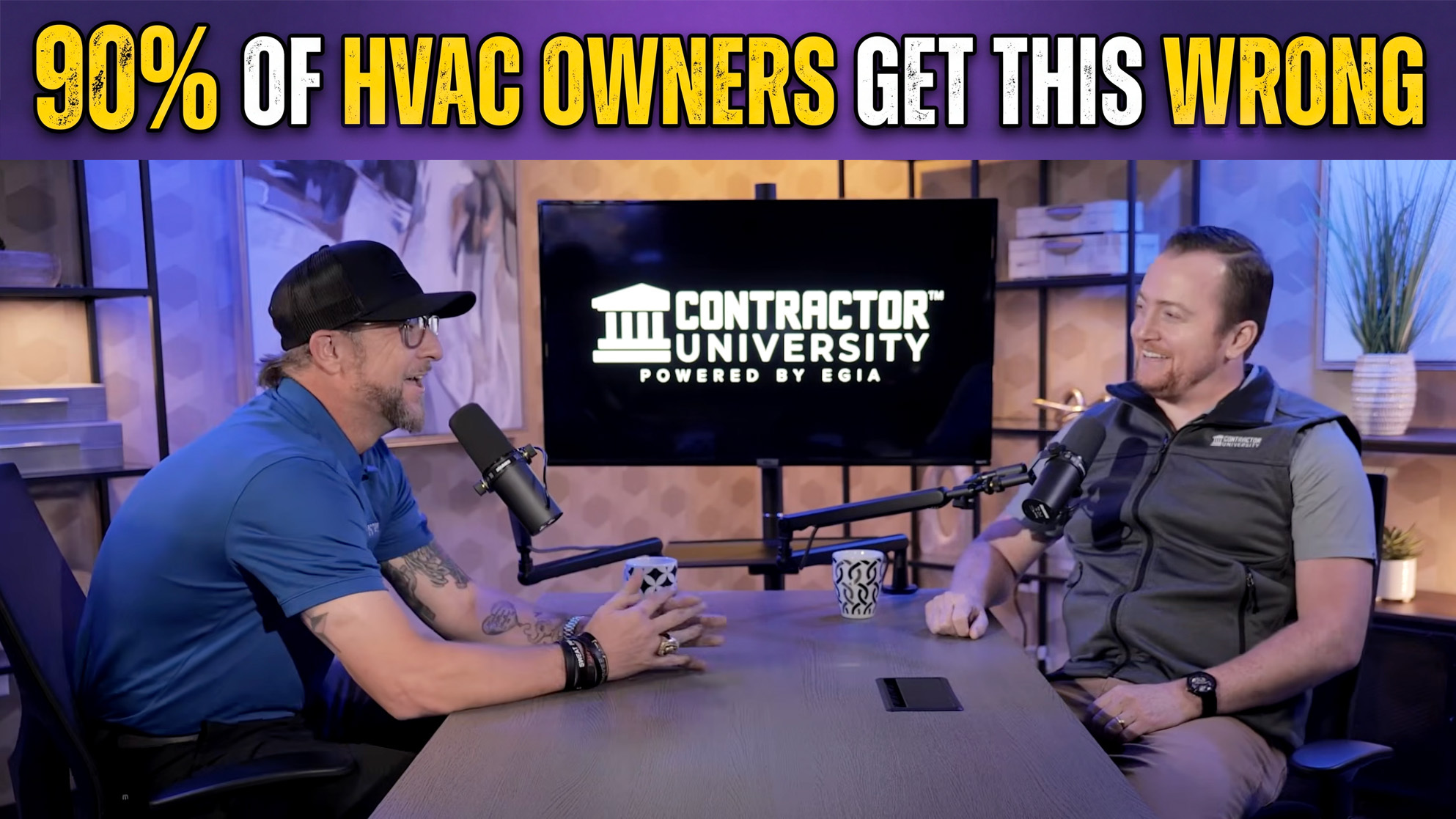
In this episode of Cracking The Code, Brad Barron and Jason Walker talk about what it takes to create a culture no one wants to leave. From building trust and reinforcing core values to training your team, holding people accountable and making work a place where you’re seen. They talk about how a fun dynamic helps contractors retain great people, create better customer experiences and grow without losing what makes the business worth being part of.
Podcast: Play in new window | Download
00:00:00:08 – 00:00:20:18
Teacher team. Hold them accountable. And understand that if you’re not where you’re at right now, it’s okay. Build a culture where no one wants to leave, right? Train them in the best possible way you can. Grow your business. Not out of revenue vanity, but out of sanity for people. It’s okay that you failed. It’s okay. You messed up, right?
00:00:20:19 – 00:00:29:08
Because I do it every single day. I’m humbled every day.
00:00:29:10 – 00:00:54:16
All right. Y’all are listening to another episode of Cracking the Code and your host, Jay Dub, as well as Brad Barron. And I’m super excited because this episode we are going to throw down about culture. Culture one of the least important topics in business. Absolutely no one cares about Brad. It doesn’t impact if it was opposite day opposite.
00:00:54:17 – 00:01:20:19
I feel like I am a seven year old. So let’s talk about culture. Okay? Let’s start with your company out in Seattle area. Yep. You have a massive $50 million operation okay. And to me as a business owner operator and we have 18 employees. Okay. To me, to dial in culture when you’re that big is a massive struggle.
00:01:20:21 – 00:01:44:19
Yes. Yeah, I would say that we want to do the best that we can to create that family, feel the fact that, you know, we know each and every person in the company. Like one of the things I strive for is to know everyone’s name. And I know that sounds ridiculous, but when you’ve got 200 people on your your payroll like it does, start to balloon and get a little more challenging.
00:01:44:20 – 00:02:12:13
But my dad, my business partner John and I were involved from like literally the reference check side of things. And I know that sounds crazy, but whether it’s myself or John Barron, one of us always at least calls one reference as part of the initial recruitment process and then all the way through from how we post, you know, our job listings to what’s listed on them, from core values to understanding our vision and mission, to what it means to be in a bear employee.
00:02:12:14 – 00:02:35:19
Like, what does that actually look and feel like? We begin not even when the person is on the team, but prior, right? Like a recruitment process starts to speak to culture and we’re really protective of it. We fight for it. Right. And you have to whether you’re 18 people in your company or 180 doesn’t matter. But it is it is a challenge, I would say, probably our biggest challenge.
00:02:35:19 – 00:03:03:13
And then finding leaders, because now we’re at a position where we have divisions and then departments within divisions and finding leaders within those departments and position divisions that can actually embody what we’re trying to look like and feel like and act like as owners down at every level, flat across the organization. That’s really hard. One thing that you mentioned is your core values, your mission, your vision.
00:03:03:14 – 00:03:25:13
And I always tell companies that that’s what separates you from your company. That’s the Bible. Yeah, that’s what you guys should it should be. It should be. Yeah. And so it’s wild to me because as you explain that, that’s one of the biggest thing, is having your team understand that as I travel and I train, I would say 90% of the companies and business owners don’t know it.
00:03:25:15 – 00:03:45:11
You don’t understand the importance of having your team go out there and explain what is our mission, what is our vision? What is our core values, what makes us different than everybody else? Right. And to have those conversations. But then how do you get your team to buy into it? Yeah. Okay. So talking about the culture side of it, what I found out royalty is we spiff our team.
00:03:45:11 – 00:04:06:02
So what we have is we have business cards that have our core values on one side and then the other side, you flip it over, it says mission and vision statement. Love it. So every single week by weekly whatever, every day we’ll shoot out a random text message and says, hey, whoever sends a picture of their core values for the day gets 50 bucks, right?
00:04:06:06 – 00:04:22:22
First one comes through someone. I’m not at the office all the time, but when I’m there, maybe an installer walks by me, a service technician, one of my office ladies walks by. I’ll say, hey, what’s our mission statement? Yeah. And they could reply what our mission statement is. They get 20 bucks. If I say, hey, show me your mission statement card on you.
00:04:23:00 – 00:04:51:19
There’s another 20 bucks, right? That’s how you really get your team to buy into the culture. But then also like how you explain having that part of your hiring process, every single department. Because when we do onboarding at royalty, they hit every department. But they do that because every department but there’s no division. Okay. So it’s how do you pass that baton off from each department and the batons of the client where it doesn’t fall through the cracks, right.
00:04:51:20 – 00:05:10:22
To give them the best experience possible. So I think that’s really important with culture is having those mission vision and core values, like you said, in front of your team and your people. And that might be something that you guys listening to this podcast right now might be a ha moment, right? Something so simple. Everyone tries to overcomplicate things, right?
00:05:10:23 – 00:05:31:11
But it’s really simple. I’m only chuckling because that was me in the first six months of being at Barron. So when I started at Barron, we’ve been a company for 45 years, right? So it wasn’t like we were new and didn’t have values that were at least at a minimum, like embodied and and lived out. But we had nothing publisher posted on a wall.
00:05:31:11 – 00:05:50:14
So literally when it was not written down, our website was a static website. It had nothing to do with our vision or mission. And again, it wasn’t that we didn’t live out values, right? It wasn’t that Barron didn’t exist to serve our customers and all the things that we talked about, but it wasn’t published or written and it was a gap.
00:05:50:14 – 00:06:09:15
To your point, 90% of the people that you go around or write to, they don’t understand the importance of that, right? But me being, you know, the engineer, the as my dad calls me, the, the social nerd that wants to go out and like I dotted T’s cross, try to try to crush it. I go in there and I’m like, all right, dad, I said, you know, hold my beer.
00:06:09:16 – 00:06:28:19
I’m going to write our core values. And most people do 3 to 5. I’m going to overcomplicate the crap out of this, and I’m going to make ten core values, because if you don’t go big, you go home, right? So going to ten core values. Bad idea. So I went through I didn’t get any input from anyone. I just sort of said these sound like really great core values.
00:06:28:19 – 00:06:43:21
Like did a Google search or whatever published them because I thought, this is awesome, right? And then I used to teach, I actually, I still do, but I used to teach a kickoff class at Barron called Customer Experience. And we talk about core values. And I asked people, how many core values do you have or do we have it?
00:06:43:21 – 00:07:00:16
Barron. And people raise their hand, you know, five, eight whatever it is. And no, we have ten and can you name them? And people would get 1 or 2. And like the second class I ever did, one of the new techs looked at me and said, oh, what are our core values? And I could only name eight of our ten core values and I wrote them.
00:07:00:16 – 00:07:30:16
So again, this speaks to though that you can’t just put words on a wall. You have to live and breathe them and walk them and preach it. Yeah. And get feedback. So we now have five and we got our five core values by going to our leadership team and asking them with these stacks of post-its to put post-its out of what values do your team members and body that you believe are what a Baron team member should be living out?
00:07:30:20 – 00:07:50:10
Right? And we took 100 plus post-its and consolidated it to five core values. But now my team buys it and has ownership of it because they helped craft them. So a little, you know, dumb, naive mistake that Brad Brad made coming in and be like, I’m gonna write. I’m a ten of them. But again, they didn’t mean anything because I didn’t get buying from the team.
00:07:50:10 – 00:08:25:22
And we really didn’t talk about why they existed. So there’s an important facet in culture that’s not just words on a wallets understanding the why behind your values, your vision and your mission. So on your end of things, what do you have a vision tag or a mission tag? Like what does? Why does royalty exist? So before we get into that real quick, let me let me explain a little bit about what makes us a little bit different with culture, too, because I think this is big, a lot of people as being in the field.
00:08:25:23 – 00:08:51:09
Okay. I never took care of myself. Health is wealth to me. Okay. And when you have installers and technicians that are in attics and hot, you know, unimaginable right circumstances that, I mean, we’re from Seattle, Sacramento, it can be 100 plus degrees out, which means it’s all next week. Yeah, exactly. Yeah. Good for business, though. I’m not complaining.
00:08:51:09 – 00:09:10:07
Yeah, but I always say, you know what? What is it? That royalty. Does that be different than everybody in my market as a culture standpoint? Okay, so when I was in the field, it’s either you go if you eat, it’s gas station, it’s fast food. You’re not taking care of yourself or you’re an attic. You have five, six jobs on you.
00:09:10:07 – 00:09:29:22
You just want to go home. So you’re just going to work through the day, work through your lunch. Right? Right. So I made it very, very apparent when I started the company that every single employee that’s employed with royalty heat, I never gets breakfast, lunch, all installers, all service technicians, all office. So we do DoorDash. I was going to ask, how does that look?
00:09:30:00 – 00:09:51:02
Yeah, so we do DoorDash. If the office gals or because we are trying to own our market of our community within three city as zip code right now. Okay. And so if our girls are our office staff have time, I’ll have them drive it there to create that face. Also, they see one of our trucks in the driveway again.
00:09:51:03 – 00:10:08:17
Yeah. So I’m always trying to dominate. If you dominate the market, how do you dominate the market? You have to dominate one neighborhood at a time. Sure. So I think the more times that they could see our trucks go into each appointment and dropping off lunch and keeping our area clean and professional, it sends a massive message to the neighborhood.
00:10:08:17 – 00:10:37:00
And so that’s what helps create us. Being different is supplying those because again, health equals wealth. Right. To go back to your conversation, you know, when it comes to your mission and vision and core values, you have to talk about it in your appointment. You have to explain to your homeowners why are these important to you? Also, when you hire on as well, which we’ll talk on another episode, right?
00:10:37:01 – 00:10:59:00
Why is it so important that they understand those mission core values and everything across the board? So when it comes to you guys talking about royalty being different than our competitors, right. What do you feel like makes you guys different on how you guys correspond with your team than your competitors? Yeah, no, I think that’s a good question.
00:10:59:01 – 00:11:19:05
I think it goes back to people like how we hire people, how we recruit, and I won’t spoil the future episode. I just winked at you again, by the way. We just do this. I don’t know, it’s sort of fun, but at the end of the day, people make the difference. So I would probably never get on the radio and say this, but at Barron we have something called The Forces of Caring.
00:11:19:07 – 00:11:41:16
And what that means is that I believe and as leaders, we believe fundamentally that we first have to take care of her coworkers in order for them to take care of our customers. We also have to invest time and resources into our community. And when those three things are met in that order coworker, customer, community, then your company thrives, right?
00:11:41:17 – 00:11:57:15
And so we we live that out, right? We put, you know, our money where our mouth is, and we pay good wages. And we have opportunities through performance space for people to make excellent livings. We have a really good benefits program. It’s not, as you know, as a business owner, it’s not important. Yes it’s important. It’s not cheap, right?
00:11:57:16 – 00:12:16:00
You know, it’s a trust me, being a new company, I’m learning that it’s a big part of your Cogs line. It is. Yeah. And so, you know, at the end of the day, people matter. And so we try to take care of our coworkers first because when they are taken care of, you know, they take care of the community 100%.
00:12:16:00 – 00:12:47:03
And ultimately your customers that are a part of that. And so that’s a big one. The other something that we try to do is, is and I fundamentally believe this, I actually have a class that talks about this, but I don’t believe that you build culture. I think that it has to be grown. And because I think that building can be forced and contrived, where growth takes time, you know, using the plant analogy, if you’re growing a tree, it’s going to take time to to plant the seed to make sure it has the nutrients needed to water to grow it.
00:12:47:04 – 00:13:05:19
And very quickly, if it’s not taken care of, it can die, right. And so I think that that is my closest analogy to culture is it’s it’s grown. It’s not built. You don’t build culture, you grow it. But you have to do that in a way that sets your team up for success and sets ultimately your customers up for success.
00:13:05:19 – 00:13:23:13
And you do that through first establishing trust. And so we’re big. I teach my leaders that the first thing that you do is establish a position of trust. It’s interesting because there’s sales trainers out there. I’m sure you probably talk about this too, that talk about the importance of establishing a position with clients. Right? Right. At the beginning.
00:13:23:14 – 00:13:41:06
Your coworkers or your team members are no different. You have to establish trust and it has to be genuine. Like it can’t be flattery, correct? I don’t know if you’ve read the book How to Win Friends and Influence People. It’s a great book, but flattery is so it’s like the BS meter. It’s easy to understand that. So legitimate tree trust.
00:13:41:08 – 00:14:00:17
But then once you have the trust and this goes back to values and not only team members but customers understanding the why know Simon Sinek says people don’t buy what you do, they buy why you do it. And so team members have to understand the why behind what they do, how it fits into the organization. So that’s the second t right of building trust.
00:14:00:19 – 00:14:22:16
Excuse me of building culture. Growing culture is you have the trust and then you have the why. And then you have to give them tools and training. I happen to know a guy that does a lot of great things with training intervals, right? You understand that. You preach it, you live it. You travel 150 weeks out of every year to do it right, but owners have to invest in their team into training and tools.
00:14:22:17 – 00:14:45:08
And so when it comes to culture growth, that’s the third T. And then you have the track and you track last. And by that I mean you never go to KPIs first. Right. But to grow culture there has to be a performance component. If you really want a culture that thrives and and aspires to be growth oriented in those things, and sometimes people miss that, they’re like, oh, we’re just going to be nice and we don’t want to push our teammates.
00:14:45:08 – 00:15:10:13
It’s like, no, you got to track. But absolutely, you just don’t do it. First, trust the why tools and training and then you’ve earned the right to track. So I don’t know if any of that resonates with you. But no, that was that was amazing. Just because at the same time, no, I agree with that 100%. You know, talking about culture and being different and continuing that conversation, going to royalty real quick.
00:15:10:17 – 00:15:29:04
I also teach my technicians to be different because I understand who we’re marketing to. Right. You know, and that’s really important as a business owner is who are you marketing to? And so I know that probably 70% of the person that’s going to be answering the door is going to be the woman of the home. And 30% of the time the kids are there.
00:15:29:06 – 00:15:47:16
And as a technician or a comfort advisor, right. What happens when you’re going through your options? Usually the kids come distract the homeowner or the homeowners the parents. Right? And you’re right there in your clothes, or you’re presenting your options and all of a sudden it goes south. Yeah, well, what we like to do is like sometimes, sometimes.
00:15:47:17 – 00:16:04:19
Right. Hyper focus relationship at the beginning. But how to be different than everyone else in our market. So in our market everyone’s going out as a technician I see it every day. They’re going straight to the thermostat. Yeah, they’re asking a couple questions at the thermostat and then they’re doing their work. Where you start is where you finish is where I tell everyone.
00:16:04:21 – 00:16:22:09
So what you have to do is you have to establish a relationship before you go in there, right? Build that relationship, that trust and that everything before just going in there. And so what we do is we start at the table and we have a coloring book. And I talked about this at IGI last year. We also have a coloring.
00:16:22:09 – 00:16:48:04
But no yeah we’re going in the right direction. Love it. Right. It’s like mind meld, but it talks about the story and journey of what the AC tune up process or the furnace process is going to look like for your mind. And it’s funny what you learn. It’s King Air that’s, you know, the technician. But then the last page, what we do is we do a coloring contest, which I’ve seen at another company, and that’s and you have a monthly spiff, right?
00:16:48:05 – 00:17:20:07
Not just with yard signs with your, with your clients, but you also have space with the kids and get them involved with the process and everything like that. And if you could, I always tell everyone, people don’t remember what you say. They remember the way you make them feel 100%. So if you genuinely show them that you care, right, and you generally have that conversation and you listen to their problems, their wants and their needs and you give them solutions, I always tell everyone if they like you, they trust you and it’s affordable, why can’t they move forward with you?
00:17:20:09 – 00:17:39:04
Right? Right. But again, it’s the culture of them buying into what you guys are delivering and making sure that they’re doing it in the field. Right. That’s the biggest thing is you guys can preach and practice in real time at the office, but are they taking the coloring book and are they doing that out in the field? I think that applies across the board.
00:17:39:05 – 00:18:00:08
Doesn’t matter if you’re a salesperson, a technician, even things in the office answering phone calls. But I think a strong culture in an organization is one in which people understand those tools, the why you do them, and then they actually go and do them. That’s sort of like your your own personal ownership. Capa oh, they’re doing the things that we talked about.
00:18:00:08 – 00:18:22:05
They’re doing the they’re using the tools that we’ve built for them. Right. But you know, at the end of the day, it can be a challenge. How do you so where where in your are you looking at your culture at royalty. Where in your onboarding process do you begin to talk about those different tools? Like how early would you say if they walk in perfect day one.
00:18:22:06 – 00:18:49:03
Yeah. Day one I mean, the second they walk into the office, you’re surrounded in a room that’s just thrown up royalty on you. Core mission values, you know. Do you give any change like you got? Oh, absolutely. Swag. Everything like that rings everything. Yeah, but. But what? I mean, culture starts right when they walk in the door, like they like I said, they talk with one of the supervisors, the managers, every single departments talking about core values, mission, how we deliver the best customer service.
00:18:49:04 – 00:19:11:05
Right. Processes, procedures. Everything is at the beginning. Now there is things that are different with cultures, with every company. Right. Totally being able to be a trainer and be able to go to different companies. One of the coolest things that I’ve seen, I’m not to the point where I’m big enough, I don’t think for this, but is a swag shop and you might have one.
00:19:11:05 – 00:19:32:04
I have an online spike shop that’s in person, but yeah, they can order online and we honestly at Barron, we let them. We trust that when our teammates have swag that has been worn out, dirty or whatever, we trust that they will order it when they need to order it. And so we don’t monitor it. They’ve got a code they put in for their employee thing and they can go.
00:19:32:04 – 00:19:55:13
And as long as the code means they’re bearing employee, they can buy stuff and it’s actually underutilized. Like our, our we call HR people ops at Barron because I think HR stands for human reprimanded. I hate the term, so I change it to people operations a while ago. But anyway, I’ve seen the in person swag shops. We just happened to do it where they can punch it in and order it, and it either direct ships to their house or at direct ships to our people out to team where they go and pick it up.
00:19:55:13 – 00:20:12:11
But we so often have to go and force them be like, hey bro, your hat is like sweating. Like you got salt, sweat marks all over this thing, right? I’m a sweater. I get that like a day. So it’s like, give me your hat, Burnett. Like, take this new one. So I have. So we have to, like, force change it out.
00:20:12:12 – 00:20:33:02
Because some of those guys and gals take pride in that to, like, check out my hat. And I’m like, it’s sort of gross, bro. It’s sort of gross. Now having a larger team, is there things that you guys do as a community, as a whole to create or continue the culture building? Yeah. Or by that do you mean like do we engage community organizations?
00:20:33:03 – 00:20:48:18
Yeah. Like or do we do like team building. Team building. So I mean, are you doing once a month team building meetings? Are you guys going out and doing a team activity? I mean, because you’re talking about 200 employees, right? So what does that look like at that? At that point we have to. Yeah. No, it’s a really good question.
00:20:48:18 – 00:21:06:15
And it is a challenge. We have to break that down into the departmental level if we truly want to build authentic relationship. Because I, as an example, can’t be in 22 departments at one time. Correct? Right. Like it just isn’t possible. So we flatten the organization and we rely on our leadership team or our departmental managers to do those things.
00:21:06:15 – 00:21:26:11
So we they have budgets associated with whether it’s, you know, last month, two of the departments took their team out to pizza, bowling and beer. Right. Like as an example, they’ll also do community giveback events to like if someone comes and says, hey, I want to, you know, ride with three of my other guys in a charity bike race for miss or whatever it is.
00:21:26:12 – 00:21:43:23
We’ll support those things as well. But if if it’s reliant upon me with a 150 to 200 person organization to be everywhere and to push culture out into the community. Good luck. Yeah, I was going to say that like, it’s not going to work and you and you just have to be aware of that. What point were you aware of it?
00:21:44:00 – 00:22:05:19
I guess immediately. So I’m very blessed. I got a chance to work at four different companies before I came to Baron. I think I could not have scripted it better, so I got to see what worked and didn’t work. The companies that did a really good job were those that empowered managers at the departmental level or divisional level to go in and create team building events for their team.
00:22:05:20 – 00:22:24:08
And so I tried to embody that at Barron when I came in. So it was immediate. I said, hey, like, we need to. It can’t just be. At the time, John Barron, the owner, going and roaring and having fun with you guys, all because it’ll happen once every two years. Like it’s just not going to happen. So pushing that down in the organization is is important.
00:22:24:10 – 00:22:55:17
I think man, you just there’s really no level of investment that is that is too much to to build team because people are expensive to hire and expensive to replace. And you know, if you’re not, if the people ops or HR departments and your companies aren’t talking about that, then I mean, I highly recommend looking at research. If you’re in a people operations team on expense of replacement of people and acquisition of people, build a culture where no one wants to leave, right?
00:22:55:18 – 00:23:21:15
Train them in the best possible way you can. And then something I say about culture to grow your business not out of revenue vanity, but out of sanity for people and sanity for people means when you grow, you might drop. I wish I had my button. When you grow, you’re growing for the sake of people because it opens up job opportunities and abilities for them to advance.
00:23:21:17 – 00:23:45:13
You know, everyone says revenues of vanity, number, profit, sanity. I’d argue that both are vanity to a capacity, because profit only comes from taking care of your people. And so when they can grow and thrive, profit will come and you’ll be okay, right? That doesn’t mean you can sit idle. You’re right. But now talking about culture real quick.
00:23:45:15 – 00:24:06:07
Social media is massive right now, okay? And it’s free marketing as well. And being a newer, established company, I think it’s really important to get your culture out there. And so I never forced any of my employees to make content. But as a leader, they see you doing it. They see you having fun with it. Then they want to start to be a part of it.
00:24:06:08 – 00:24:26:00
Right? And I think I’m beyond blessed of my two years of operations at royalty, where we created a great team in culture, where as I’m on the road, I could look at their TikTok, their social media, and my team’s having fun. Yeah, that’s good. And I think that’s the most important thing is fun. Exactly. You got to have fun with what you do.
00:24:26:01 – 00:24:48:12
You know, so many times I go to companies and technicians, you know, being in a leader position, they open up to you. And a lot of times they feel like they wake up, they come to work, they’re complacent. They’re stuck. Yeah. Right, right. And I like I was just in New York a week ago, and there was a gentleman that I rode with, and I’ve known him for four years now, and I had the opportunity to come back and ride along with him.
00:24:48:12 – 00:25:06:13
And I said, do you lost the the fun that you had? Oh, man. Like last year. So it was that apparent. You could just. Absolutely. Because here’s the thing. Right. When I’m a trainer and I go out on site, I’m cracking jokes. So when we’re talking about stuff like when I talk about Superbad, I’m talking about Superbad, Super Troopers, you know, the movie 100%.
00:25:06:13 – 00:25:30:18
So yeah, exactly. Right now. Now. So, so, so me and this technician, we had a conversation. I said, you know, two years ago, we went and we explained suffocation of a system. And we said, how many times while we’re talking about it, can we like, imitate of us choking just the air and be like, right. And when I rode with them this time it was all business, no relationship, no fun.
00:25:30:19 – 00:26:02:19
Yeah, he felt like he just woke up, got in his van and just met me at the appointment, right. And I was like, bro, where’d the fun go? Yeah. What was his response I don’t know. Okay. Yeah, that’s what he said I don’t know. Yeah. And I think he just lost the spunk because of culture. Yeah. I to be real, I think it could have been just a culture of different and nothing against the company or anything but accountability to make sure that your team’s having fun with what they’re doing.
00:26:02:20 – 00:26:20:00
Totally right. So after the conversation, just to let you know, he literally texted me two days ago, I wish I had my phone on me. Yeah. And he sent me a text and said, hey, thanks for writing with me. Just to let you know, a company came out. I was at an estimate. Two other companies came out and I was the highest one.
00:26:20:00 – 00:26:41:06
I got the job nice because I thought he was having fun. Yeah, that’s what he said. Because I had fun. Yeah. And so think about that. If you’re not having fun. Yeah. What are you doing? Yeah, no, I agree. I think you got to have passion in what you do. You got to have fun though, too. So and I think that go hand in hand.
00:26:41:06 – 00:27:02:11
I don’t know if you think about the things in your life that you do both professionally and personally. When you’re having fun, life’s a lot more enjoyable and I think people notice it too. But that’s that’s actually a really, really, really good reminder. I shouldn’t say actually. That was like a really mean way to say that was actually a really wasn’t all things.
00:27:02:12 – 00:27:11:06
Yeah, that wasn’t a bad idea. Jason is is you’re not wrong.
00:27:11:08 – 00:27:43:02
No, I love that. What do you guys do? So okay, so you asked me the question, what do you guys do for fun? So what is fun look like for royalty team members? Great question. So every month I try to do a team building experiment or a fun day. Not an experiment, a fun day. So I got this from going to different companies and really seeing that, hey, when your team goes, accomplishes a goal or has a great month or they’re just working hard, maybe you didn’t accomplish the month right, but you saw them in their grinding.
00:27:43:02 – 00:28:07:20
They’re working hard, hustling. It’s it’s okay to take a step away from revenue for maybe a couple hours during the day to go do a team building activity. So what we do is this month we’re going to South Lake Tahoe and they got 15 zip lines. They got a team building course and everything. And we’re going to do the course line one where you go yeah I like that.
00:28:07:22 – 00:28:26:15
Next month we’re going to do night slides at Sunsplash, which is a massive water park that we have here. But you do it at night. At night. So so they open the park from 5 to 10. We don’t have that in Washington. It’s not hot enough. So yeah it’s called nicely so they could work all day. Right. And we go bring their family everything, have nice slides.
00:28:26:16 – 00:28:43:21
I’d have to wear a park if I did it at night. I’m a Seattle, so a break room. Not an escape room, but a break room. So they bring stuff and you smash stuff. It’s called a break room. I don’t think so. They’ll have, like, they’ll give you baseball bats last TVs, and you just bash stuff up, right?
00:28:43:21 – 00:29:05:10
So what is it, office space? Yeah, I feel good to be a gangster, but it’s fun because you’re not just doing work things with your employees. Right. And so often I ask different technicians that I ride with. And I’m always curious. I say, how many of the employees do you hang out with outside of work? And it’s crazy to hear that most of their responses is none.
00:29:05:11 – 00:29:25:01
None. Yeah, yeah, I think that’s a good indicator of of health is like, you’re always say so at one of Barron’s core values right is relationship focused. But we have sub bullets underneath of that. And one of them is that, you know we don’t I don’t need our team members to be friends. I want them to have at a minimum, a professional working relationship.
00:29:25:03 – 00:29:47:14
However, I do think a litmus test for solid culture is if people are friends outside of work. And I know that I’ve had people disagree with me when I share those things, but I I’ll stand by my word. I think that there is something to be said about friendships created within an office space that transcend the the walls of of the shop.
00:29:47:15 – 00:30:07:22
Right. And I think it speaks to safe relationships and the ability to be transparent and vulnerable and all those things. And that needs to be modeled absolutely by the leader, too. Like, I get up and I am the first in front of a leadership team meeting. If we have a mistake, like I always point back at myself, like, where did I fall short here?
00:30:07:22 – 00:30:24:18
And I don’t do it to be a martyr. That comes across as disingenuous too. You’ve probably seen those people who are like, oh, it’s me, and I’m the problem. And it’s like, well, go away you! Or like, that’s not. But if you’re genuinely like, you know, here’s where I made a mistake. And by the way, I’ll own it.
00:30:24:18 – 00:30:46:04
And this is what I’m going to do better. Then you’re modeling something that they in turn will do. And the reason I share that when it comes to friendship is I think that vulnerability and transparency is essential in building relationships and friendships. So if you’ve created a culture where that’s something that is happening, I think you’re probably finding people are being their true, real, authentic self.
00:30:46:06 – 00:31:09:17
So and that’s powerful. Customers also see through the BS too. Yeah. So talk about the importance of training and building culture throughout training as well. Yeah. It’s not important at all. We don’t train at bearing 000 role playing zero anything. Accountability just wiped out. It’s just gone. Oh man. No. Like I said, I mean going back to my growth of culture for tease, right.
00:31:09:18 – 00:31:34:04
Tools and training is number three. It’s imperative I think that if you’re not training you’re going backwards. And I think that that is something that a lot of people miss. They look at it as a budget item and they go, well, I’m just going to cut that or that number is a point higher or whatever. And if the number is a point higher and you’re doing training right, it should yield better retention, more revenue and higher sales and all those different things.
00:31:34:04 – 00:31:51:07
But I mean, training is a core part of what you need to ask you a question. Do you stop training at all during busy season or pull back? We scale back. I think that’s a good question. You know, I’ve heard that people get on sticky notes like you never stop training. And I’m like, yeah, sometimes you do. Let’s go.
00:31:51:08 – 00:32:13:19
June 1800 hours. Burn them out. No, no, we we I like I saw it I like that. No, I, I fundamentally believe that there’s two different seasons in business and they’re going to be different depending on your, you know, your climate and all that. But one is called development season and one is called delivery season. That’s at least what we call them.
00:32:13:19 – 00:32:40:05
A barren development season is your training seasons at your shoulder. Seasons and delivery is your Mackay. Crush it right. And if you look at even at barren, you look at what’s take heating and cooling for an example. In the northwest we have two shoulder seasons, right? February March is one of our shoulder seasons in September. So we have three months out of the year where like we are spending buku dollars on marketing to generate hopefully 80% of our capacity.
00:32:40:06 – 00:32:55:15
Right. And we budget that in and we know and we know that we’re going to lose money those months like it’s factored in. Yeah. And it’s funny I share that with people that don’t understand the industry like friends or family that are like, we lose money. I’m like, no, we lose money during parts of the year. Like, oh, what does that feel like?
00:32:55:16 – 00:33:19:10
I’m like, yeah, it’s stressful because I’m hoping that, you know, the next month that we’ve budgeted profit. Like we’re able to do that. But going back to your original question, absolutely. Like there is a development season and then there’s a delivery season. And I fundamentally believe in delivery season. You go make a spend the three four months that you have and the time that you have that’s not on revenue producing work to train your team and then budget in.
00:33:19:10 – 00:33:36:23
And that’s a lot of times the reason that training doesn’t happen in organizations during development season, because they didn’t put it in their budget and they go, oh, we don’t have any money to spend. I’m like, well, did you price right to include training? What do you mean? I’m like, well, you got to build it in. When do you establish that budget and your your training plan?
00:33:37:00 – 00:34:00:10
Yeah. Because I mean, it’s usually soon October, November. It’s coming soon. Yeah. It’s always funny. I feel like we just get done and get into the year and it’s like, oh, we’re budgeting in for next year, right? So but we go and speaking of culture, we make that fun to you know for those are you listening in like make your financial planning and leadership planning and marketing planning fun because it is hard work.
00:34:00:10 – 00:34:18:12
It takes mental and physical strain. So but what we do is we go off site like we have a cabin, my wife, and have a cabin up in the Mount Baker area, and we’ll go up and rent from our neighbors and we’ll do, you know, hikes or we’ll go skiing or whatever it is. If the snow is good early that year, sometimes it’s not.
00:34:18:13 – 00:34:38:10
But we go and we have fun together. We break bread together, we grill steaks together. We have good. I’m not going to buy crap wine. No two checks like I’ll bring a nice no box of wine or anything. Okay. And invest, invest in that planning. Because culturally speaking, like that also shows your team that this matters. And this time is important.
00:34:38:12 – 00:34:53:07
If you go up there and you’re cut and cost and those type of leadership planning events, then they’re going to look at the next year and go, how conservative can we be? Like, where do we cut costs? I don’t want to do team building with my team. So you as a leader have to go and actually emulate that.
00:34:53:10 – 00:35:11:15
So what about you guys? I’m assuming you do annual planning. Annual planning. Who do you like? Who do you. So at a company that’s got 18 people, who comes to your annual planning? Myself. Okay. So. So for my team. Gotcha. Yeah. We come together as a group huddle. Love it. Now I go to now I do have my mentors.
00:35:11:16 – 00:35:33:23
Right. So Weldon Long Wally, good friend, good mentor of mine. So I do go through my monthly financials and I’ll send them those and I’ll get references of what he thinks I could do better. I also have my good buddy Brad Hone that will go through my monthly financials with me as a leader. So I don’t technically bring them in, but I use them as mentorship with it, sure.
00:35:34:00 – 00:35:57:07
But I like to bring my whole team in to understand the business side of it. Even my technicians, even my installers. Sure. Because if they don’t, the biggest thing is being a startup company. You just said some months you don’t make money, right? Which is amazing. It’s okay if you guys aren’t making money. My first year of growing royalty the right way, I lost 300,000 last year.
00:35:57:08 – 00:36:16:10
Yeah, okay. No one likes to lose money, okay? But I know that I’m playing the long game. Sure, I’m understanding that if you do it the right way and you dial everything in the right way, that if you foresee the future and be consistent with what you do, the end results will come, right? So I’m a big believer in that.
00:36:16:10 – 00:36:36:16
But to answer your question, yeah, I would say Weldon Long is one of my biggest influencers. He’s been with me for the last seven years, really coaching and mentoring me on the training side of everything. Yeah, yeah. No, I think yeah, this goes back to being transparent, being vulnerable. I think if you show people, I always tell my dad, when I first started, I was very blessed.
00:36:36:16 – 00:36:55:14
I came from a company prior to working at Barron that was very transparent with their financials. They showed people how much they made, what their Ebit was, whether it was good or bad, whether they made money or didn’t money make money. And I told my dad. So coming in, that was not the the traditional way of Barron. It was sort of the leaders kept what was happening close to the chest.
00:36:55:14 – 00:37:10:16
Ownership kept things even closer, not because they, you know, didn’t trust their team, but because I think that they were just concerned that, man, when you had a bad month or at bear and back before I started it was that we did a lot of new construction. New construction doesn’t even begin to make money until the end of the year.
00:37:10:17 – 00:37:27:13
Right. Like and that’s assuming you have even some ideas that year, like it is hard business. But I told my dad, I said, if you don’t do that. And at the time we’re like I said, 13, $14 million business, every employee at your company is going to think John Barron makes 13 or $14 million. Right. And I know that sounds ridiculous, right.
00:37:27:14 – 00:37:46:05
Are they going to think you make $2 million? Right. And the answer is you don’t. Right. And so it would be nice. It wouldn’t it be. Yeah. Let’s just do that. Culture though requires transparency. Strong culture does. And it’s something that I think a lot of leaders and owners can be really concerned about sharing. But it’s better your team knows.
00:37:46:05 – 00:38:09:12
Let them know what’s working, what’s not, what are the areas of improvement. But anyway, I just yeah, I don’t know. I think that there’s just such a stigma and shame about being transparent and vulnerable as a leader, especially in a male dominated industry. Yeah, I’ve worked with a lot of female leaders across the US too, and they’re a little bit better at sharing what what’s going on.
00:38:09:13 – 00:38:32:07
I envy that because sometimes with with dudes, it’s like, come on, man, share a little more, be more transparent. It’s okay that you failed. It’s okay. You messed up, right? Because I do it every single day. I’m humbled every day. Absolutely. And we grow from our mistakes. Yeah. What’s what, like life wouldn’t be exciting if we didn’t make mistakes and then learn from them, right?
00:38:32:08 – 00:38:53:15
Yeah. And that’s that’s only that’s where you only see growth, right? Right is by making mistakes. Now do it like when it’s smooth sailing. I actually think businesses can get complacent. I actually think that’s what happened in Covid. That’s my opinion I agree, I agree with one of the worst things that could happen because it created especially I bet you saw it in sales coaching.
00:38:53:16 – 00:39:16:04
It created complacency. Absolutely. They were going out and shooting fish out of a barrel. Right. And then 2023 hits and you’re like, what? What? I have to actually like build relationships with customers again. Yeah. Oh my God. You know they want me in their house now. Yeah. Exactly. Yeah. It’s just we have to communicate. Yeah, exactly. The thing they don’t just click an estimate online anymore.
00:39:16:05 – 00:39:18:18
Dang it.
00:39:18:20 – 00:39:45:09
I guess that’s where the future is going, right? Is, is this AI and stuff and everything like that, which could also help with culture, with where technology is going as well, which will probably be another episode. I think that’s a perfect episode, but to tease it, I’ll say this I fundamentally believe that AI can be of benefit to your company, but I also think if implemented wrong, it could be an incredible hinder or be Henderson.
00:39:45:09 – 00:40:08:01
So I don’t even know that’s a word I’m going to make up words here to say it’s your dictionary. Copyright Brad Baron Henderson. But yeah, we’ll definitely dive into that later. And I’ve got a few people I’m excited to bring on the how do you say it? Cracking the code cracking the Code podcast. But but yeah. How about closing closing thoughts today?
00:40:08:03 – 00:40:37:12
If you were to give listeners and viewers maybe one piece of cultural encouragement going into this busy season, because we’re going to be talking about managing busy seasons and slow seasons here in a little bit. Yeah. What would that be? What would you say your, your vision is for for this summer when it comes to culture, care about your people, understand the fundamentals of the company, the Bible, the structure, you know, mission core values and teach your team.
00:40:37:12 – 00:41:02:13
Hold them accountable and understand that if you’re not where you’re at right now, it’s okay. But with hard work, consistency and processes and procedures disguise the limits of where you’re going. That’s what I’m going to end it with. Yeah, I love that. Yeah, I think from my standpoint I’ll go back to well first off I agree values, mission, vision, all that is is imperative.
00:41:02:15 – 00:41:24:03
The playbooks how you do that. But I’ll go back to build trust first with your team members. Right. Make sure they understand who you are. Be transparent and vulnerable. Make sure they understand the why and every single initiative that you guys do. Give them the tools and training to succeed. Do not be the owner that does not invest in training and that does not invest in tools to be successful.
00:41:24:03 – 00:41:45:23
And then last, if you’re someone which I hope if you’re listening to this podcast you are that wants to grow, understand that tracking is important, but it has to be done last. Trust first the why, second tools and training then track. But with that being said, hope everyone had a good time tuning in today and we’ll see you next time on cracking the code.